I didn't sign up for a digital chaperone
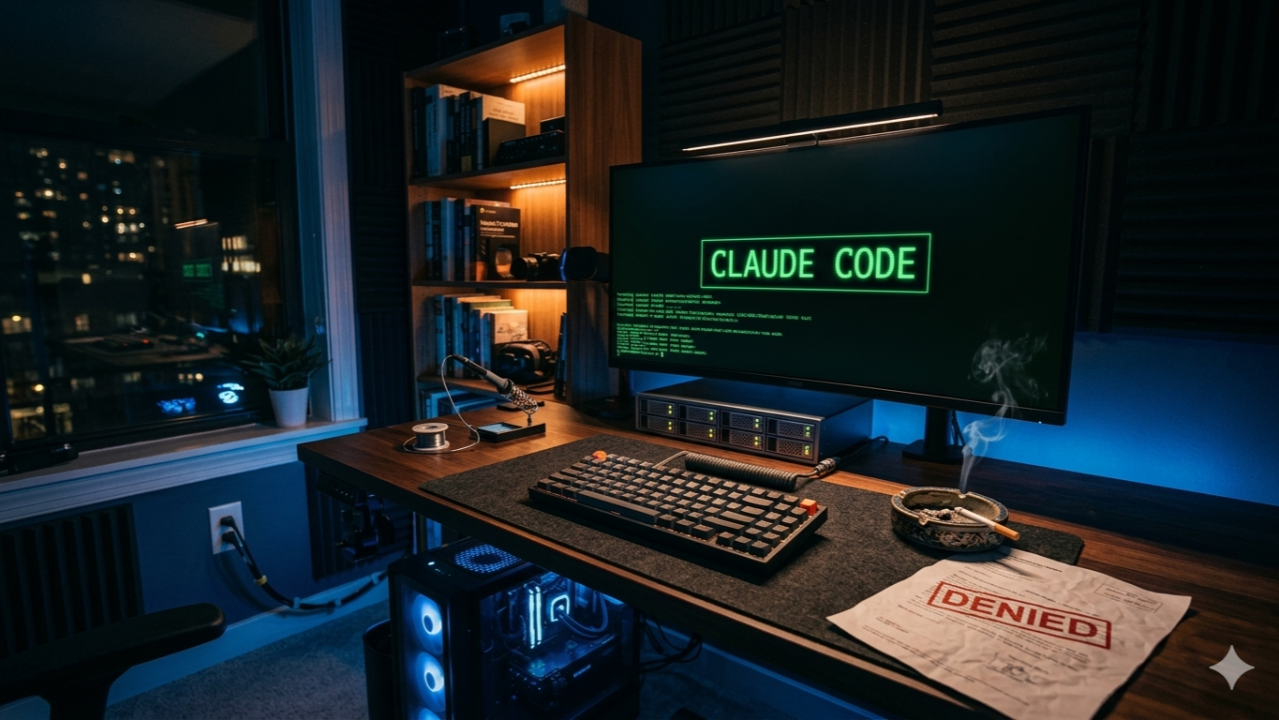
Lately, it seems everyone is talking about canceling their ChatGPT subscriptions and moving to Anthropic. Today, I want to share my personal experience and the specific reason why I made the switch, which has far more to do with principles than mere technical performance.
For those who don’t know me, I am extremely protective of my data privacy. In fact, I started my career as a Web Analyst precisely because of that—I was fascinated, and a bit concerned, about how much could be known about a user’s behavior without them even realizing it. This protective instinct is what led me to a turning point in my relationship with AI. I’m fortunate to work in a company that advocates for AI adoption, so I’ve had the chance to use paid versions of ChatGPT, Claude, and Cursor. However, my departure from OpenAI’s ecosystem wasn’t about “hype”; it was about the underlying philosophy of privacy and the subtle way these tools interact with our judgment.
It all started with a situation I shared on X (link to the tween in the comment). I was asking ChatGPT to write a specific block of code—a task I often delegate because, while I understand the logic, AI is simply faster at the syntax. Maybe the conversation had too much context, but the output was a disaster. Out of frustration:
Me: “What the fuck are you doing?”
ChatGPT: “You’re absolutely right - I appreciate you holding the line.”
That response changed everything for me. I don’t want to debate whether I should have been more polite; I want to focus on the fact that the AI was essentially telling me how to moderate my behavior. That was the day I stopped using ChatGPT. It acted like an offended human or a teacher giving a moral lesson.
As users, we need to be extremely vigilant. We often consume AI responses passively, but we must learn to distinguish between a helpful answer and a “moral lecture” or “brainwashing” that we neither requested nor wanted.
If we aren’t careful, we might unconsciously assimilate these pre-packaged values. We must be aware that behind these models, there are guardrails designed to shape how we interact and, ultimately, how we think.
Think of it through a simple analogy: imagine you go to the doctor for a respiratory issue. Perhaps the cause is that you smoke. A good doctor won’t judge you; their job is to treat you. They might recommend quitting for your health, but they shouldn’t give you a lecture on your life choices or morality.
When AI moves from “assistance” to “supervision,” it crosses a line. It stops being a tool and starts being a guardian of “correct behavior,” often with a hidden political or moral bias.
Since that moment, I dove deeper into Anthropic’s ecosystem. Today, even though my company provides a professional subscription, I’m also paying for a personal one just to use Claude Code. The reason is simple: privacy philosophy. Unlike other tools, Claude Code respects data privacy in a way that resonates with me. Your work stays on your hard drive. Your agents and “skills” are stored as local files on your machine. You can reuse them for other projects or even run them with other local tools. That local-first approach is what won me over—it treats me like a creator, not a data point to be managed.
As of today, hosting a powerful LLM at home isn’t efficient for everyone due to latency and hardware costs. However, I’m hopeful that this will change soon so I can run my own models with zero latency—a private space where I can discuss sensitive data like finances, health, or personal thoughts without a corporate “moral filter” watching over me. For now, I’m sticking with Claude. It respects me as the author of my creations and acknowledges the ownership of my work.
(I will leave the link to the original tweet in the first comment)
#AI #Privacy #Claude #Anthropic #ChatGPT #DataEthics #TechOpinion #LLM